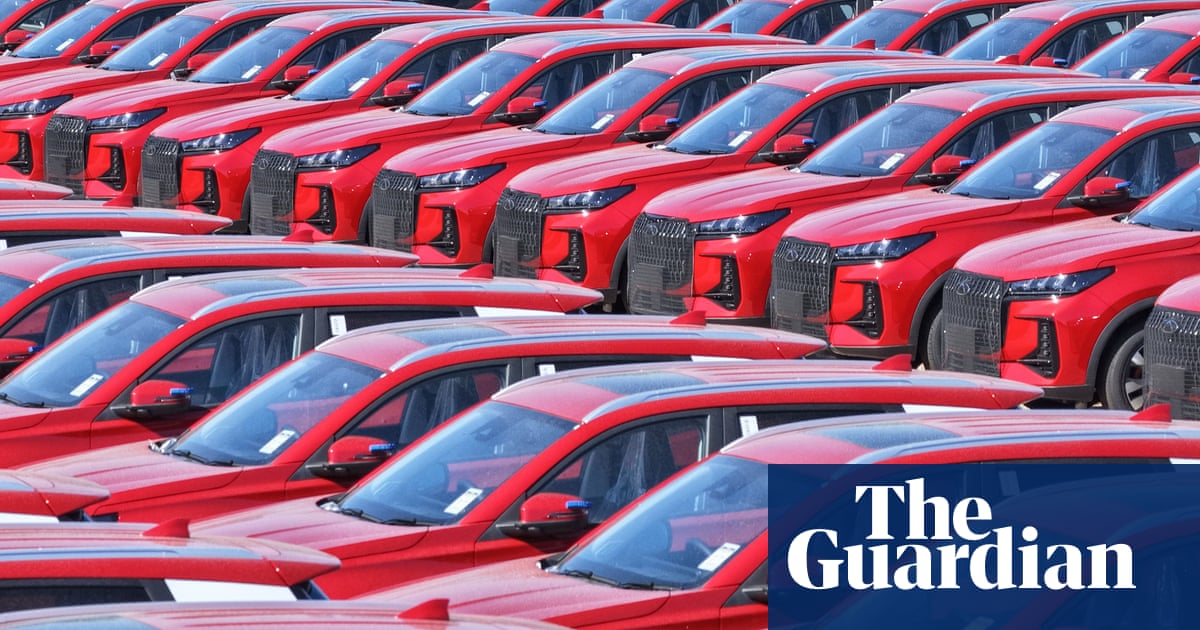
UK's Tariff Decision on Chinese Vehicles: A Complex Balance
The UK government's recent announcement that it will not impose tariffs on Chinese vehicles has ignited a fiery debate, shedding light on the intricate balance between economic interests, industrial policy, and geopolitical considerations. This decision, made by Business Secretary Jonathan Reynolds, has sparked diverse reactions, with some praising the move for fostering competition and consumer benefits, while others express concerns about potential job losses and the impact on domestic industries.
Economic Benefits vs. Industrial Protection
"good. tesla shouldn't hold the monopoly on EV's. and chinese EV's are soo much cheaper and offer great quality."
This comment encapsulates the sentiment of those who welcome the absence of tariffs, arguing that it promotes competition and provides consumers with more affordable options. With Chinese electric vehicles (EVs) being significantly cheaper, there is a belief that this decision benefits British consumers, especially those on a budget.
However, the issue is not as straightforward as it seems. Critics of the decision highlight the potential impact on domestic car manufacturing and the broader industrial landscape. They argue that cheaper imports, particularly from China, can lead to deindustrialization and job losses, as local industries struggle to compete with subsidized foreign products.
"Except that the cheap imports do real damage to our car plants here. There is one way to fix this without tariffs, and Burnham is already discussing it publicly."
The Impact on Domestic Industries
The UK's automotive industry, though devastated and largely sold to foreign ownership, still employs hundreds of thousands of people and supports entire town economies. The concern is that without protective measures, this industry could further decline, leading to significant job losses and economic repercussions.
"What car plants? The industry is devastated and sold to foreign ownership. It’s on life support. We sold our soul a longtime ago."
Geopolitical Considerations
The decision also has geopolitical implications, particularly in the context of the UK's relationship with the EU. The EU, which imposed tariffs on Chinese electric vehicles in 2024, is concerned about the potential backdoor access to the European market through the UK. This has led to calls for the UK to align its trade policies with the EU, a move that could have significant implications for future economic ties.
"Some in Brussels have been pushing for Britain to levy tariffs on Chinese electric vehicles in return for getting access to the European market under the new trade rules."
Environmental and Ethical Concerns
Beyond the economic and industrial considerations, there are also environmental and ethical concerns associated with Chinese-made EVs. The production of these vehicles is often subsidized by the Chinese government, and there are questions about the use of slave labor and the environmental impact of China's electricity grid, which is one of the dirtiest in the world.
"Cheaper due to slave labor and government subsidies..."
The Way Forward
The UK's decision not to impose tariffs on Chinese vehicles highlights the complex nature of global trade and the challenges faced by nations in balancing economic interests with industrial protection and geopolitical considerations. As the debate continues, it remains to be seen how the UK will navigate these complexities and what impact its decisions will have on its domestic industries, its relationship with the EU, and its role in the global transition to electric vehicles.
"Right now, you can choose which EV you buy. I hope people realize that without some form of intervention, in a few years, the only choice will be a Chinese EV."
The future of the automotive industry and the broader implications for the UK's economy and society are at stake, making this a crucial decision with far-reaching consequences.

